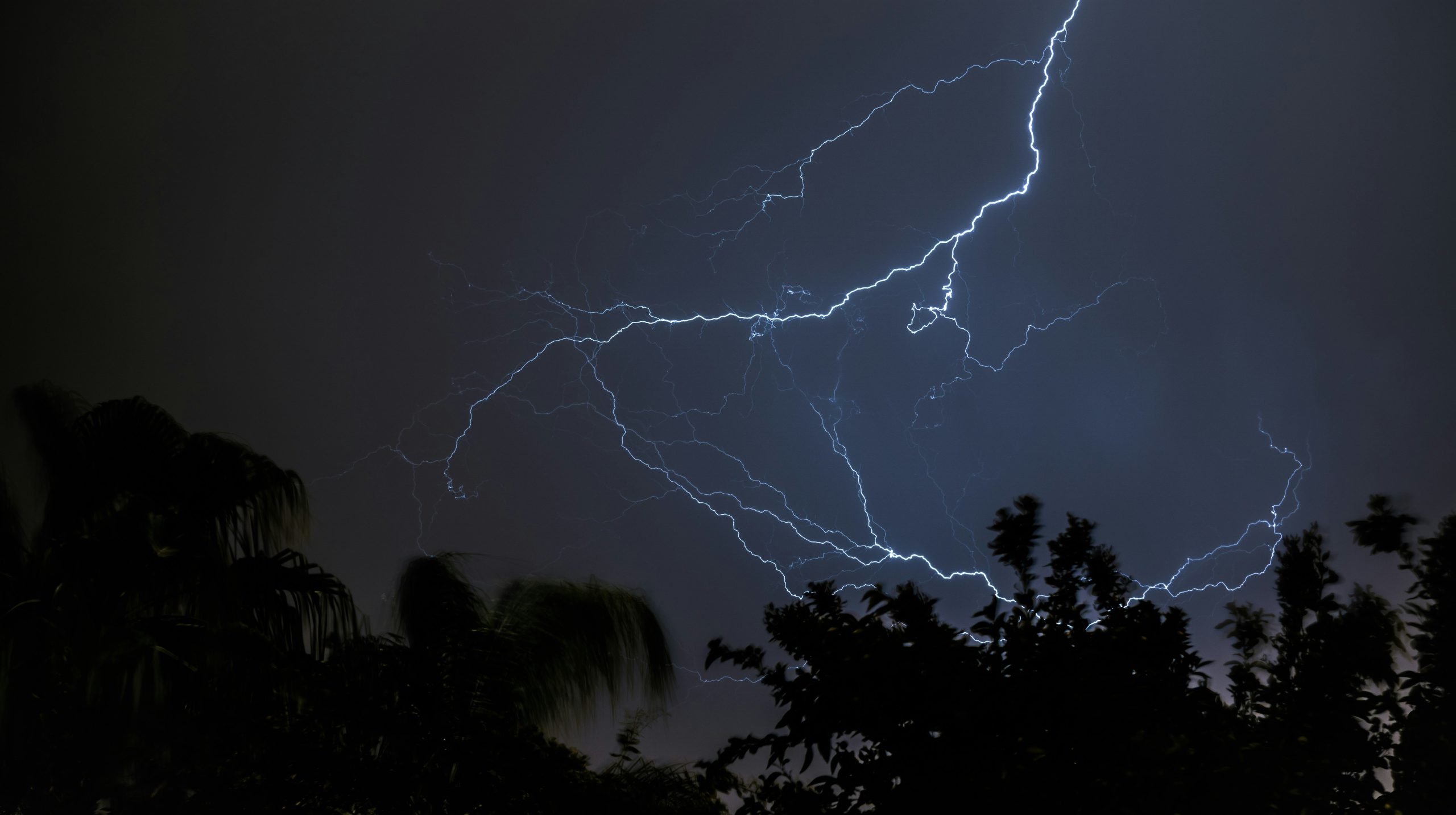
Lightning strikes are one of the most dramatic and powerful natural events on Earth, captivating and intimidating in equal measure. This phenomenon, which has inspired countless myths and scientific inquiries, is a critical aspect of Earth’s weather systems. In this blog, we’ll delve into how lightning occurs, how often it strikes, and the likelihood of being struck by lightning.
How Do Lightning Strikes Occur?
Lightning is a massive electrical discharge caused by imbalances between storm clouds and the ground or within the clouds themselves. Here’s how it happens:
- Charge Separation:
- Inside a thunderstorm, updrafts and downdrafts cause ice particles to collide and transfer charges. Smaller ice particles tend to gain a positive charge and are pushed to the top of the cloud, while larger hailstones carry a negative charge and sink to the bottom.
- Electric Field Formation:
- This separation creates an electric field between the top and bottom of the cloud or between the cloud and the ground. The stronger the storm, the more intense the electric field becomes.
- Breakdown of Air Resistance:
- Air is usually a good insulator, but when the electric field becomes strong enough, it ionizes the air, creating a conductive path.
- The Lightning Strike:
- A “stepped leader” of negatively charged particles moves downward from the cloud toward the ground. Simultaneously, an “upward streamer” of positive charges rises to meet it. When they connect, a powerful electrical current flows, creating the bright flash we see as lightning.
Types of Lightning
- Cloud-to-Ground (CG) Lightning: The most well-known type, where lightning strikes the Earth.
- Intra-Cloud (IC) Lightning: The most common type, occurring within a single cloud.
- Cloud-to-Cloud (CC) Lightning: Lightning between two separate clouds.
- Ground-to-Cloud (GC) Lightning: A rarer type, where the strike originates from the ground and moves upward.
How Often Do Lightning Strikes Occur?
Lightning is a frequent phenomenon on a global scale. Here are some striking statistics:
- Global Frequency:
- Approximately 100 lightning strikes occur every second worldwide, equating to about 8.6 million strikes per day and over 3 billion strikes annually.
- Lightning Hotspots:
- The Earth’s lightning activity is not evenly distributed. Regions near the equator experience the most strikes due to warm temperatures and high moisture levels.
- The Lake Maracaibo region in Venezuela holds the record for the most lightning activity, with an average of 232 lightning flashes per square kilometer per year.
- Seasonal and Diurnal Patterns:
- Lightning is more common during warmer months and tends to peak in the afternoon and early evening when atmospheric instability is greatest.
Likelihood of Being Struck by Lightning
The odds of being struck by lightning are remarkably low but not negligible. Here’s what you need to know:
- Individual Risk:
- The average person’s chance of being struck by lightning in a given year is about 1 in 1.2 million.
- Over a lifetime (80 years), the odds increase to approximately 1 in 15,300.
- Factors Affecting Risk:
- Location: Living in lightning-prone regions, like Florida (known as the lightning capital of the U.S.), increases the risk.
- Activities: Outdoor activities such as hiking, golfing, or working in open fields elevate exposure.
- Seasons: Summer months see the highest number of lightning-related incidents.
- Survivability:
- Remarkably, about 90% of people struck by lightning survive, though they may suffer long-term effects such as burns, neurological damage, or cardiac issues.
The Importance of Lightning
While often feared, lightning is vital to Earth’s ecosystem:
- Nitrogen Fixation:
- Lightning helps convert atmospheric nitrogen into compounds that plants can absorb, enriching soil fertility.
- Weather Regulation:
- Lightning influences weather patterns and balances the global electric circuit.
- Wildfire Initiation:
- While destructive, lightning-ignited wildfires play a role in ecosystem renewal, clearing old vegetation and making way for new growth.
Safety Tips to Avoid Lightning Strikes
- Seek Shelter: The safest place during a thunderstorm is indoors or inside a car with a metal roof.
- Avoid Conductors: Stay away from metal objects, water, and electronic devices.
- Stay Low: If caught in the open, crouch down but avoid lying flat. Minimize contact with the ground.
- 30-30 Rule: If you see lightning and hear thunder within 30 seconds, seek shelter immediately. Wait 30 minutes after the last thunderclap before venturing outside.
Conclusion
Lightning strikes are a mesmerizing display of nature’s power, a reminder of the dynamic and interconnected systems that sustain life on Earth. While the chances of being struck are slim, understanding the science behind lightning and adopting safety measures can help us appreciate this phenomenon without unnecessary fear. By respecting the forces of nature, we can coexist safely with one of its most electrifying expressions.